
A QUICK NOTE BEFORE WE DIVE IN - Starting June 1st, Pod Street Week officially launches
Every week, our team listens to dozens of the most important finance, markets, and macro podcasts so you don’t have to. We pull out the signal, cut the noise, and hand you the insights that actually move money. What would take you 15+ hours of listening takes just a few minutes. Starting June 1st, Pod Street Week officially launches. And for you, the readers who’ve been with us from the beginning, there’s going to be an exclusive launch offer you won’t want to miss.
Here’s a first look at what’s coming:
· Monthly subscription will be $9.99.
· But for the first 30 days only, you can lock in the annual plan for just $99.
· That’s two months completely free, and you keep that rate for as long as you stay subscribed.
If you’ve enjoyed what you’ve been getting so far, what’s coming next is going to be even better. We’re going above and beyond to expand this product and make it as valuable as possible. I’ll share the full details in the coming days. Stay tuned.
You can sign up as an early-access founding member here (subscription starts June 1) to continue receiving weekly Pod Street Week editions:
Now let’s get into this week’s edition:
THIS WEEK · 12 PODCASTS · WEEK OF MAY 22, 2026
This week we bring you twelve exceptional podcasts spanning Stephanie Pomboy’s unflinching diagnosis of a Fed trapped between stagflation and political paralysis — and why the extend-and-pretend game for marginal credits has finally run out of road, George Noble on the death of buy-the-dip, the awakening of bond vigilantes, and why gold miners and energy remain the only credible longs in a market of stocks, Cliff Asness on the most important risk concepts investors get wrong — from volatility laundering in private equity to the mythology of cash on the sidelines, Jim Bianco on the ticking clock of the Hormuz closure and why bond yields will continue to rise until something breaks, Robert Thummel on why electricity is the new oil and how natural gas infrastructure is the most underowned energy trade in the market, George Friedman on the emerging world order in which economic interdependence has structurally reduced the probability of great-power war, Ben Carlson on the lessons from every bear market since 1929 and why doing nothing remains the hardest and most valuable investment skill, Ed Dowd on why the disconnect between the consumer and stock prices has never been wider and why a 20–30% pullback is the base case, former MI6 Chief Richard Moore on the world’s most contested geopolitical moment and the enduring value of the Five Eyes alliance, Clem Chambers on the SpaceX IPO as the starting pistol for the bubble’s final phase and where to find the second and third-order AI buildout plays, Arthur Laffer on why his five pillars of prosperity remain intact and why Kevin Warsh’s appointment is the most bullish development for US price stability in a generation, and Ted Oakley on energy as the most under-owned sector in the S&1P — set to replicate what gold and silver did in 2025 — and why patient liquidity management in a speculative market is the portfolio manager’s true edge. Each summary is designed to be immediately actionable — whether you are allocating capital, running a business, or simply trying to understand the forces reshaping the world around you. We hope you enjoy them.
THIS WEEK’S LINEUP
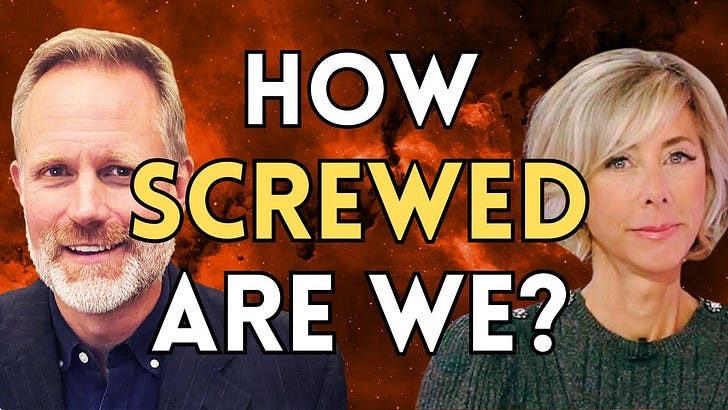
EP 1 Just How Screwed Are We? — Stephanie Pomboy — MacroMavens Founder — Watch Full Video
EP 2 Fed’s Hands Tied, Bond Vigilantes Awoke, Buy the Dip Dead, Margin of Safety Thin — George Noble — Noble Capital Advisors CIO — Watch Full Video
EP 3 What Investors Get Wrong About Risk — Cliff Asness — AQR Capital Management Co-Founder — Watch Full Video
EP 4 Running Out of Oil and Options — Jim Bianco — Bianco Research President — Watch Full Video
EP 5 — Electricity Is the New Oil — Robert Thummel — Tortoise Capital Managing Director — Watch Full Video
EP 6 Economy to Enter Most Dangerous Decade; What’s Next for Jobs, Global Wars — George Friedman — Geopolitical Futures Founder & Chairman — Watch Full Video
EP 7 He Studied Every Bear Market Since 1929: What Did He Learn? — Ben Carlson — Ritholtz Wealth Management Portfolio Manager & Author — Watch Full Video
EP 8 I’ve Never Seen Anything Like This — Ed Dowd — Phinance Technologies Founder — Watch Full Video
EP 9 Former MI6 Chief Richard Moore on the Changing World Order — Richard Moore — Former MI6 Chief (C), Intelligence & Diplomacy Veteran — Watch Full Video
EP 10 Biggest Opportunity in History Revealed — Clem Chambers — ADVFN Founder & Investor — Watch Full Video
EP 11 The Doubters Are Wrong: Boom Times Ahead for the USA — Dr. Arthur Laffer — Economist, Reagan Advisory Board Member, Creator of the Laffer Curve — Watch Full Video
EP 12 Why Energy Could Surge Like Gold Did Last Year — Ted Oakley — Oxbow Advisors Founder & Managing Partner — Watch Full Video
Full summaries with actionable insights and investment focus for each podcast follow on the pages below.
EP 1 - Just How Screwed Are We?
Stephanie Pomboy — MacroMavens Founder
Stephanie Pomboy of MacroMavens warned that markets have shifted from expecting Fed cuts to pricing in potential rate hikes for the first time since 2022 — a major risk for zombie companies, private equity borrowers, and weak credits that depended on ongoing Fed easing. Sticky inflation, driven by oil, and a Fed unable to offset cost-push inflation are creating a critical stress point for marginal credit markets..
Actionable Bullet Points
• The Rate-Cut Fantasy Is Dead — Marginal Credits Face an Existential Reckoning: From the moment the Fed began hiking in 2022, markets spent four years pricing in an imminent pivot. Junk-rated companies that borrowed at 4% are now rolling debt at 10%; investment grade borrowers have seen costs rise 60–70%. The life support for the weakest credits was the perpetual promise that cuts were coming. That promise is now mathematically impossible in the near term: May CPI comps will be terrible, oil inflation is sticky, and the Fed cannot stimulate away a supply shock without making it worse. Companies that could not refinance at zero rates certainly cannot survive at current levels without cuts. Watch private credit redemption flows as the leading indicator — when the marginal lender stops rolling, the cascade begins.
• The Warsh-Bessant Rate-Cut Plan Has Been Blown to Smithereens: Pomboy’s clearest new insight: the original strategy was elegant — Warsh would cut the Fed funds rate to immediately reduce short-duration debt service costs on the federal government’s T-bill-heavy financing, shrinking the deficit and giving the bond market confidence that fiscal trajectory was improving, which would gradually bring long rates down. That plan required low oil. The Iran war destroyed the precondition. Now Warsh faces an impossible trilemma: cutting rates looks irresponsible, holding rates extends the pain for marginal credits, and hiking risks triggering the recession that political masters are desperate to avoid.
• Oil’s Next Move: A Sharp Pullback When the War Ends, Then a Resumption of the Secular Bull: Pomboy’s oil framework: yes, when the Iran conflict resolves, oil will have a swift and sharp retreat from current levels. But oil was already structurally rising before the war — AI-driven energy demand, rare earth and commodity complex inflation, and the long-run structural underinvestment in production were all in place. On top of that, the war has incentivised every major country to rebuild its strategic petroleum reserves, which were globally ransacked during the suppression period. That stockpile-rebuild demand will sit on top of the AI energy demand wave. The base case after a ceasefire: oil drops to $75–80 and then resumes its march higher.
• May Inflation Will Be Worse Than April — The Market Is Not Ready: April PPI and CPI were already bad. May comps to a year ago are significantly more challenging. Even if oil prices go nowhere from here, the year-over-year comparison will produce ugly headline numbers. The summer therefore brings zero possibility of inflation improvement until August at the earliest, more likely September. Warsh cannot cut into that backdrop. The market’s recent shift from pricing cuts to pricing hike risk is the rational response to a mathematical reality.
• Secular Energy Bull Is Intact — The Rate-Oil Combination Is the True Macro Tax: Rising oil prices and rising interest rates moving together simultaneously represent a genuine double-hit tax on growth. Oil acts as a regressive consumer levy; higher rates act as a credit tightening mechanism. Both working in the same direction means demand destruction is coming — Pomboy’s concern is less about immediate economic collapse and more about the financial system: the marginal credit complex, private credit, and over-leveraged borrowers whose refinancing lifeline has now been cut. This is the financial stress event, not necessarily the broad economic one.
Investment Focus
Pomboy’s framework this week is the most important near-term risk assessment available. The actionable template: (1) position for continued stress in the lowest-quality credit segments — watch Blue Owl, private credit gating events, and CDS on AI-adjacent software borrowers as leading indicators, (2) do not own long-duration bonds and do not position for Fed rate cuts in 2026 — the math does not support it, (3) own energy as the structural secular bull resumes after the war ceasefire — use the pullback as the entry, (4) monitor May CPI closely — a bad number accelerates the timetable for private credit stress, (5) position for higher short rates rather than lower: T-bills remain the best risk-adjusted cash equivalent in this environment.
EP 2 - Fed’s Hands Tied, Bond Vigilantes Awoke, Buy the Dip Dead, Margin of Safety Thin.
George Noble — Noble Capital Advisors CIO
George Noble, CIO of Noble Capital Advisors, argues markets are entering a generational inflationary regime shift marked by overvalued tech stocks, rising bond market stress, oil-driven inflation, and a Fed no longer able to support markets. He is bearish on consumer and tech stocks while favoring gold miners, energy services, and resource equities.
Actionable Bullet Points
• The Bond Market Will Discipline Politicians — Not the Other Way Around: Noble’s highest-conviction macro call: rising bond yields are not a temporary blip. Japan’s 30-year highs and Europe’s 20-year highs are the canaries. The US 10-year at 4.5–4.6% is not yet restrictive in a historical sense, but the direction and speed of travel matter more than the absolute level. If Warsh or the administration attempts to cut rates against a backdrop of 3%+ inflation and a still-expanding fiscal deficit, the bond market will revolt. Conviction in this view has increased materially as price action has finally confirmed the narrative: bonds are in a structural bear market, and the death of financialisation is playing out in real time.
• The 60/40 Portfolio Is Dead — Bonds Are Certificates of Confiscation: A 4.5% nominal 10-year bond, after tax and after 3.5–4% inflation, guarantees a real loss. The 40% bond allocation in a traditional portfolio is not a defensive allocation — it is a slow-motion capital destruction machine. Noble’s Best Income Ideas conference was designed specifically to address this: how do you generate income without being beholden to the US Treasury market? The alternatives he identifies — Brazilian sovereign bonds at 14% yield with currency appreciation potential, energy MLPs paying 7–8%, gold royalty companies, and dividend-generating resource equities — all offer more attractive real yields with better structural tailwinds.
• Gold Miners Are Generating Extraordinary Cash Flow — SSRM Is the Specific Buy: Noble’s single-name conviction: SSR Mining trades at 7x earnings with 75% margins, has sold its Turkish asset for $1.5 billion, is executing a 10%+ float buyback (Mag-7 capital return playbook), and is a pure North American producer post-sale. The Barrick buyback announcement drove an 8% single-day gain when it was announced — SSRM is running the same script at a fraction of the valuation. More broadly, miners are generating so much free cash flow at current gold prices that they are de-equitising rather than reinvesting in new capacity. This is the same structural tailwind that drove the Mag-7 decade of outperformance and has more to run in the mining sector.
• Buy the Dip Is Finished — The Authorities Cannot Come to the Rescue: Noble invokes Louis Gave’s insight: the policy tools available in a disinflationary environment are categorically different from those available in an inflationary one. Buy-the-dip was rational for 40 years because the Fed could always cut rates and Congress could always spend more — neither action was inflationary. Now both levers are constrained: cutting rates against 3.8% CPI would send the bond market into revolt, and spending more into a 7% deficit would only accelerate the problem. The margin of safety — Seth Klarman’s concept — is the narrowest Noble has seen in his career. The downside risk is not underwritten by cheap valuations or policy optionality.
• Energy and Resources Are the Golden Age of Stock-Picking — Equal-Weight Over Market-Cap: Noble’s actionable positioning: long energy service companies (OIH, land drillers), gold miners (SSRM, GDX, GDXJ), and resource equities broadly. Short consumer stocks (Home Depot, Lowe’s, McDonald’s, Lululemon, Coreweave) and technology names with unsustainable margins. The equal-weight S&1P is flat or down while the cap-weight index makes new highs on narrow AI participation — that divergence is the tell. The long-resources/short-consumer-and-tech spread has produced a 10% return in six weeks even as the index rallied. This is the golden age of stock-picking, not ETF-buying.
Investment Focus
Noble’s framework is the most explicitly actionable long/short template available this week. The investment template: (1) buy SSR Mining — the highest near-term risk-adjusted miner with the capital return flywheel already running, (2) own OIH and land drillers as the energy service plays — drill activity has to increase regardless of where the oil price settles, (3) short consumer discretionary (Home Depot, Lowe’s, Lululemon) and speculative AI names (Coreweave) where earnings are in a bubble rather than price, (4) replace the 40% bond allocation with income-generating real assets — Brazilian bonds at 14%, energy MLPs at 7–8%, gold royalty companies, (5) avoid ETFs — know exactly what is inside every vehicle before allocating.
EP 3 - What Investors Get Wrong About Risk
Cliff Asness — AQR Capital Management Co-Founder
Cliff Asness, co-founder of AQR Capital Management, argues today’s market resembles the dotcom era, with equities near extreme valuations and a wide gap between cheap and expensive stocks. He also warns that private equity is understating true risk exposure, which could become problematic when market stress exposes underlying volatility.
Actionable Bullet Points
• The Current Market Rhymes With 1999 — Schiller CAPE Near 40 Is the Second Highest Ever: The dotcom bubble peaked at a Schiller CAPE of approximately 45. Today’s CAPE is close to 40, making this the second most expensive market in modern history by that measure. The spread between cheap and expensive stocks on AQR’s value factors is at roughly the 75th percentile — elevated but not as extreme as the 1999–2000 peak. Asness is careful not to make a directional market call — his argument is probabilistic: 19 out of 20 times in history when markets have reached these valuations, the subsequent long-term returns have been poor. This is not certainty; it is base rates. Act accordingly.
• Private Equity Is Committing Volatility Laundering — Institutions Are Taking More Risk Than They Know Private equity volatility appears artificially low because assets are not marked to market regularly. Asness argues institutions are effectively holding levered equity risk disguised as stable, low-volatility exposure. When liquidity or credit stress forces repricing, the true risk will surface rapidly. He also believes the traditional illiquidity premium is disappearing, as investors now value illiquidity itself rather than requiring compensation for it.
• There Is No Cash on the Sidelines — Stop Using This as a Bullish Argument: One of Asness’s most forceful pet peeves: when someone buys stock with “cash on the sidelines,” the seller now has that cash. The total amount of cash and stock in the system is conserved. The “cash on the sidelines will come in and push markets higher” argument is a logical fallacy that has been repeated in every bull market for decades. Sentiment indicators tracking money market fund levels are better (they may signal that staging-area capital tends to precede stock purchases), but they are not the literal argument that is typically made. Strip this reasoning from your analysis.
• Volatility Is a Perfectly Defensible Risk Measure — Permanent Loss of Capital Is Vacuous: The pervasive critique — “the real risk is permanent loss of capital, not volatility” — is correct in theory and useless in practice. You cannot, with certainty, identify in advance which drawdowns are permanent and which are temporary. The very concept of “not risky because it will come back” requires certainty that no sane investor possesses. Volatility is not perfect, but it is measurable, observable, and useful for portfolio construction and risk management. More importantly, risk control — sizing positions so that even being wrong does not destroy you — is a separate function from the question of whether you are right. Conflating them is how investors blow up.
• The Dotcom Analogy: The Big Companies Were Overvalued, Not Just the Pure Plays: Common wisdom says the dotcom bubble was about worthless companies with no earnings. This is partly wrong. The most dangerous overvaluation was in companies like Cisco — enormous, profitable, with genuine earnings — trading at a PE of 100. The equivalent today is not an obscure AI startup but the large-cap technology names that have moved from hugely free-cash-flow-generative to consuming all available capital for AI capex. The question is not whether the technology succeeds (it probably will) but whether the returns on capital justify current prices. Historically, 19 out of 20 times at these valuation levels, the answer is no.
Investment Focus
Asness’s framework is the most analytically rigorous risk assessment available this week. The investment template: (1) reduce private equity allocations or at minimum mark them to realistic volatility assumptions in your portfolio model — you are carrying more equity risk than you think, (2) treat the aggregate market’s current Schiller CAPE of ~40 as a base-rate argument for lower long-term forward returns, not a market timing signal, (3) avoid the cash-on-sidelines argument as a bullish catalyst — it does not hold up logically, (4) own the value spread — cheap stocks versus expensive stocks — as the most robust long-term factor even if the wait can be brutally long, (5) size every position with the recognition that being right eventually is different from being right before the capital runs out.
EP 4 - Running Out of Oil and Options
Jim Bianco — Bianco Research President
Jim Bianco, president of Bianco Research and one of the most intellectually honest macro analysts in the business, joined Maggie Lake on Wealthy for a precise, data-driven assessment of exactly where the Hormuz crisis stands and what it means for bonds, rates, and the broader economy. His core message: the world has approximately a few more weeks of inventory buffer before the cumulative impact of the Strait being closed translates into genuine physical supply constraints. The Iranians know this and are playing for time. Bond yields will continue to track crude oil prices. The market has moved from pricing 2.5 rate cuts to pricing a 50/50 chance of a rate hike in just 75 days — and that directional repricing is not finished.
Actionable Bullet Points
• The Inventory Buffer Has a Deadline — Real Supply Constraints Are Weeks Away: Before the war, global oil consumption was 106 million barrels per day. The Strait supplied roughly 20 million of those. Workarounds have replaced approximately 7 million. The remaining 13 million barrel per day deficit is being filled by drawing down inventories: SPR, private storage, tankers, and pipeline fill. That buffer has a finite end. Bianco estimates a few more weeks, perhaps a month at the outside, before the cumulative deficit begins producing genuine physical shortages that force demand rationing via higher prices. The Iranians’ entire strategy is to wait for the price to become so painful that the West offers better terms.
• Oil and Bond Yields Are Now a Single Trade — Watch Oil to Forecast Rates: From March 27th onwards, a chart of bond yields and a chart of crude oil prices are nearly identical. They move together because the market understands that sustained high oil prices mean sustained high inflation, which means the Fed cannot cut, which means bond investors demand higher yields. The practical implication: if you want to know where 10-year yields are going, watch oil. If the Strait stays closed and oil pushes toward $125–150, expect the 10-year to test and potentially exceed 5%.
• The 10-Year at 4.6% Is Already Higher Than the 2022 Inflation-Fighting Peak — This Is the Irony: During the most aggressive Fed tightening cycle in 40 years — 75 basis points per meeting — the 10-year yield peaked at 4.2%. Today, with the Fed on hold and potentially facing a hike, it is already at 4.6%. The reason: when the Fed was hiking aggressively, bond investors relaxed because they believed the Fed cared about inflation. Today the Fed is neither hiking nor credibly tightening, so bond investors are expressing their inflation concern through yields instead. The counterintuitive implication: if Warsh wants bond yields to come down, expressing genuine concern about inflation and perhaps even hinting at hikes could paradoxically lower long rates by restoring confidence that the Fed has it covered.
• Private Credit’s Real Risk Is AI Disruption of Software Portfolios, Not Systemic Contagion: Private credit’s heavy exposure to software companies is becoming a risk as agentic AI reduces software switching costs and threatens cash-flow stability. Bianco argues current redemption gates reflect rational repricing rather than systemic panic, unless hidden bank leverage to private credit proves larger than expected. Bank lending exposure to private credit is the key contagion indicator.
• Portfolio Construction: Accept 5–7% Returns or Take Speculative Risk — There Is No Middle Ground: Bianco’s honest assessment: the era of 15–20% annual equity returns was anomalous. At current valuations, a realistic expected return on a balanced portfolio is 5–7% annually. TIPS at 2.5–3% real plus inflation are extraordinarily attractive on a risk-adjusted basis right now — one of the best sovereign instruments in memory. Investment grade bonds at 5% all-in yields are competitive. If you want 15–20%, you are in the speculative sandbox: crypto, metals, Mag-7 AI plays — and that sandbox has a very different risk profile. Be honest about which game you are playing.
Investment Focus
Bianco’s framework is the most precisely calibrated oil-rates-economy nexus analysis available this week. The investment template: (1) treat oil as the leading indicator for bond yields and act accordingly — do not fight the correlation, (2) if the Strait re-opens, expect a rapid fall in yields and a corresponding equity rally — have a plan for that scenario, (3) own TIPS as the structurally most attractive sovereign instrument in the current environment — 2.5–3% real return with inflation protection is exceptional, (4) avoid long-duration bonds until either the Fed panics (signals hikes) or oil falls — neither is the base case today, (5) treat the private credit software disruption as a sector story not a systemic threat unless bank-to-private-credit leverage evidence emerges.
EP 5 - Electricity Is the New Oil
Robert Thummel — Tortoise Capital Managing Director
Robert Thummel of Tortoise Capital argues the best energy opportunity is not oil producers, but natural gas and energy infrastructure supporting AI-driven electricity demand. His thesis is that electricity is becoming the critical input of the AI era, and the U.S. has a major advantage through abundant natural gas and irreplaceable pipeline infrastructure that remains underappreciated by markets.
Actionable Bullet Points
• Natural Gas Infrastructure Is the Irreplaceable Moat — Scarcity Value Is Structurally Under-Priced: The US operates the world’s largest energy infrastructure network. It cannot be replicated — decades of construction, permitting, and capital allocation created it. Companies that own this network earn stable, contracted, high-quality cash flows that are largely insulated from commodity price volatility. Free cash flow yield in energy infrastructure is 9–10% versus 1.5% or lower in mega-cap technology. That spread is too wide. The “halo trade” — rotating from low-FCF mega-cap into high-FCF real assets — has begun and Thummel believes it is durable.
• AI Buildout = Electricity Demand = Natural Gas — The Chain of Causality Is Tight: Every data center is a massive electricity consumer. AI inference at scale requires more power than AI training. The US’s competitive advantage in the global AI race is specifically its ability to generate electricity cheaply from domestic natural gas. This creates a structural link: AI capex boom drives data centre construction, which drives electricity demand, which drives natural gas demand, which drives pipeline throughput. The companies in the middle of that chain — pipelines, LNG terminals, compression stations — benefit from volume growth that is essentially contracted and does not require oil prices to cooperate.
• Canadian Oil Sands Pipeline: The Long-Term Strategic Opportunity — But Execution Risk Is Real: Canada’s oil sands are one of the few major non-OPEC, non-shale supply sources, but new pipeline projects still face long timelines and political risk. Thummel believes current geopolitical pressures improve the odds of Canadian infrastructure expansion, making existing operators like TC Energy, Pembina Pipeline, and Enbridge the better investment opportunities versus betting on new pipeline construction.
• Generalists Are Still Under-Allocated to Energy — The Secular Return Is Just Beginning: The energy sector has been chronically under-owned by generalist investors who associate it with over-spending, commodity price cycles, and ESG headwinds. The sector has structurally changed: capex discipline is now ingrained, free cash flow is being returned to shareholders via dividends and buybacks, and energy is one of the best-performing sectors in the S&1P 500 this year. Yet allocations remain near historic lows. As generalists realise the performance gap and the structural FCF advantage, the flow of capital into the sector will provide a multiple-expansion tailwind on top of fundamental improvement.
• US Natural Gas Producers With LNG Take-or-Pay Contracts Are the Structural Long: As global energy supply chains diversify away from the Persian Gulf post-Hormuz, the demand for US LNG with long-term take-or-pay structures grows exponentially. Countries in Asia, Europe, and the Middle East are being forced to reconsider their supply security assumptions. US natural gas at $2–3 per MMBtu with LNG export capability priced to global markets at $8–12 per MMBtu is an extraordinary structural arbitrage. The companies with existing or near-completion LNG export capacity and contracted offtake agreements are the cleanest expression of this structural demand shift.
Investment Focus
Thummel’s framework is the clearest energy infrastructure thesis available this week. The investment template: (1) own natural gas infrastructure — pipelines, compression, and LNG terminals — as the backbone of the AI economy rather than commodity producers whose returns are driven by oil prices, (2) own Tortoise Energy Infrastructure products or individual midstream MLPs (Enterprise Products, Energy Transfer, Kinder Morgan) for the 7–8% dividend yield plus FCF growth, (3) buy existing Canadian energy infrastructure (TC Energy, Enbridge) as the investable expression of Canada’s strategic supply diversification, (4) own US natural gas producers with contracted LNG offtake as the global gas diversification trade, (5) treat the energy sector’s underweight in generalist portfolios as the source of the valuation gap — that gap will close.
EP 6 - What’s Next for Jobs, Global Wars
George Friedman — Geopolitical Futures Founder & Chairman
George Friedman, founder of Geopolitical Futures, argues the post-1945 military-led world order is shifting toward one driven primarily by economic competition rather than great-power war. He believes deep economic interdependence makes direct conflict between major powers structurally irrational, reshaping geopolitical risk and global investment allocation.
Actionable Bullet Points
• Great-Power War Between the US and China Is Structurally Irrational — The Thucydides Trap Does Not Apply: Friedman argues the traditional “Thucydides Trap” no longer applies because neither the U.S. nor China can realistically conquer or seize the other’s wealth. Instead, economic competition has replaced military conflict as the dominant form of rivalry. China’s reliance on the U.S. consumer market acts as a structural constraint, making direct conflict economically self-defeating and reinforcing trade leverage as the key geopolitical tool.
• The New World Order Is Economic Competition, Not Military Alliance — Free Trade As a Cold War Tool Is Over: Free trade was not a principle — it was a Cold War weapon. The Bretton Woods system was designed to make Europe prosperous enough to resist Soviet expansion. Foreign aid was not charity; it was strategic competition. Both instruments have outlived their Cold War justification. In the new system, tariffs and trade restrictions are legitimate geopolitical tools rather than moral failures. Free trade as a dogma is obsolete. For investors, this means supply chain geography, tariff exposure, and trade-route security matter more to long-term earnings than they have in 40 years.
• Russia Is Losing the Long Game — Position for Post-Putin Normalisation: Friedman argues Russia’s Ukraine strategy has largely failed, with mounting economic strain and limited ability to sustain the war indefinitely. He sees the most likely outcome as a negotiated settlement that preserves some Russian gains while allowing Putin to claim victory domestically. Such an outcome could significantly reprice European energy infrastructure and industrial stocks currently discounting long-term Russian resource exclusion.
• Ukraine Outcome: Neutral Buffer State, Not NATO Member — European Defence Is the Structural Spend: Friedman’s Ukraine scenario: Ukraine becomes a neutral buffer state — not NATO, but not Russian — analogous to Switzerland between potential rivals who will not, in fact, fight. European NATO members will be compelled to rebuild military capacity from near-zero as the US signals reduced willingness to carry the alliance alone. This is a decade-long European defence spending cycle that is just beginning. Companies in the European defence industrial base — Rheinmetall, Leonardo, Thales, KNDS — have visibility on spending growth that rivals the best secular growth stories in any sector.
• Defense Spending Is Technology Spending — Do Not Conflate Deficit Reduction With Cutting R&D: Friedman’s most important insight for investors who want to reduce the US deficit by cutting defence: the microchip was invented for the US Air Force by Texas Instruments. The internet was ARPANET. AI’s foundational algorithms were funded by DARPA. Defence spending is the primary driver of dual-use technology development that then drives civilian productivity for decades. Cutting defence in the name of fiscal responsibility would shift the burden of invention entirely to the private sector, which has different incentives and shorter time horizons. For investors, this means defence budgets are more defensible than most people assume.
Investment Focus
Friedman’s framework provides the structural geopolitical lens for portfolio allocation. The investment template: (1) long European defence companies — Rheinmetall, Leonardo, Thales — as the decade-long rebuild from near-zero capacity is just beginning, (2) position for Russian leadership transition and post-Putin European energy normalisation — own European gas infrastructure companies that would benefit from re-engagement, (3) treat tariffs as a permanent geopolitical tool rather than a temporary aberration — supply chain geography now matters structurally to earnings, (4) own India and select Southeast Asian jurisdictions as the high-static-power, high-demographic-dividend economies of the next two decades, (5) avoid the mistake of viewing the Ukraine conflict as the permanent state of European geopolitics — normalisation is the base case and equities are not pricing it.
EP 7 - Studied Every Bear Market Since 1929: What Did He Learn?
Ben Carlson — Ritholtz Wealth Management Portfolio Manager & Author
Ben Carlson of Ritholtz Wealth Management argues that successful investing is less about predicting crises and more about managing risk, staying invested, and maintaining long-term discipline. He believes AI-driven disruption may be compressing investment cycles and creating one of the biggest market regime shifts since the rise of index investing.
Actionable Bullet Points
• The Most Important Risk Is the One You’re Not Worried About — Sensational Headlines Systematically Mislead: Shark attacks, geopolitical crises, and market crashes generate the most media attention but create the least long-term wealth destruction. Financial crises and bad market timing create the most. Carlson’s research confirms that geopolitical risk almost never shows up on long-term charts — but financial crises leave permanent marks. The current environment is an almost perfect inversion: investors are intensely focused on Iran, rates, and the AI bubble (all sensational and real) while underweighting the quiet, structural erosion of consumer balance sheets, private credit quality, and housing fundamentals. The most dangerous risk is always the one the crowd is not discussing.
• Doing Nothing Is the Hardest and Most Valuable Investment Skill: Carlson notes that even investors who started at the 1929 market peak still earned solid long-term returns if they stayed invested. His key point is that doing nothing during crises is psychologically difficult but often optimal — much like goalkeepers who statistically perform better staying centered, despite looking wrong when the ball goes elsewhere.
• Invest in Your Human Capital First — It Is the Most Underrated Inflation Hedge: Carlson argues the best inflation hedge is not gold or commodities, but human capital — your ability to grow earnings through skills, career development, and adaptability. For younger investors especially, investing in AI-relevant and technology-adjacent skills may offer the highest long-term return.
• Stocks Are a Better Long-Term Inflation Hedge Than Gold — But the Mechanism Is Misunderstood: Gold’s track record as an inflation hedge is surprisingly poor on a correlation basis — it works sometimes and fails at other times. Stocks over long horizons (10+ years) consistently outperform inflation because companies can raise prices and adapt their business models. The catch: in the short-term inflationary shock that investors are experiencing now, stocks suffered alongside bonds in 2022. The lesson is that inflation hedging is a personal finance problem — a fixed-rate mortgage, good job security, and a diversified equity portfolio — not an asset allocation puzzle to be solved by rotating into commodities.
• AI Is Compressing Investment Time Horizons — This Changes the Meaning of Buy-and-Hold: Carlson’s most forward-looking observation: the explosion of available strategies, ETFs, and AI-generated investment ideas is making the question of what to say no to more important than ever. Successful investing has always been about filtering and focus rather than comprehensive analysis. AI will compound this by creating an infinite number of plausible-seeming strategies. The investors who succeed in this environment will not be those who analyse the most but those who have the clearest decision rules about what they will and will not own — the equivalent of the penalty kick goalkeeper who makes a rule to sometimes stay in the middle.
Investment Focus
Carlson’s framework is the most practically useful long-term wealth-building guide available this week. The investment template: (1) hold through drawdowns with a pre-committed plan rather than reacting to headlines — the data on doing nothing is overwhelmingly supportive, (2) invest in human capital first — skill development and career advancement compound faster than almost any financial instrument, (3) set explicit filters for what you will and will not own — the abundance of options in 2026 makes saying no more valuable than saying yes, (4) treat inflation as a personal finance problem first (fixed-rate debt, job security, long equity horizon) rather than an asset allocation problem, (5) recognise that the 2022 drawdown was a normal part of the inflationary cycle, not a permanent break — the long-run evidence for patient equity ownership has not changed.
EP 8 - I’ve Never Seen Anything Like This
Ed Dowd — Phinance Technologies Founder
Ed Dowd of Phinance Technologies warns the current market rally is historically narrow and heavily concentrated in AI and semiconductor stocks, with semiconductor indices surging at dotcom-like speed. He expects a moderate-to-severe economic slowdown, followed by a 20–30% market correction, a temporary Fed-driven rebound, and then another leg lower.
Actionable Bullet Points
• Semiconductor Stocks Have Done the March 2000 Move — Double-Ordering Is the Tell: The SMH and SOX indices rising 64% in five weeks since the April low is not a sign of fundamental strength — it is the characteristic blowoff of a cycle top. The tell is double-ordering: purchasing managers, worried about helium shortages (a critical semiconductor manufacturing input), panicked and placed orders for twice their actual needs. This creates phantom demand that satisfies for a quarter but creates the inevitable order cancellation wave when actual inventory arrives. Dowd was physically present at the March 2000 top in semiconductors and describes the current pattern as nearly identical. When the double-ordering wave reverses, earnings estimates for semiconductor companies will drop sharply.
• The Consumer and Stock Prices Have Never Been More Disconnected: Credit card delinquencies, auto loan delinquencies, and all consumer credit deterioration metrics are rising. Real incomes are being squeezed by oil-driven inflation that companies cannot fully pass through (margin squeeze incoming). Housing prices are declining on a national basis for the first time, driven by the removal of illegal immigrant demand (FHA loans that were being issued to undocumented individuals are gone) and the beginning of broader price correction that started in Texas, Florida, and border states and is now spreading. The stock market, meanwhile, is at or near all-time highs on the back of 36% AI/Mag-7 exposure and 18% semiconductor exposure in the S&1P. These two realities cannot coexist indefinitely.
• Cash Is the Best Near-Term Investment — Long Duration Bonds Are the Next Move: Dowd’s positioning is highly defensive: heavy cash allocations paired with long-duration Treasuries as his highest-conviction trade. He believes extreme bearish sentiment toward long bonds has created a strong contrarian setup, with slowing growth and eventual Fed cuts likely to trigger a significant rally in 20- and 30-year Treasuries
• Private Credit Engine Has Seized — Net Redemptions Exceeding Inflows for First Time: The marginal producer of credit over the past several years was private credit and private equity. Both have now stalled: net flows in private credit have turned negative for the first time in a long time. Banks had already stopped making commercial and industrial loans on a net basis. This double-shutdown of the credit creation mechanism — both bank and shadow bank channels simultaneously contracting — is the financial equivalent of removing the fuel from the engine. Bitcoin, which Dowd uses as a leading liquidity indicator (it peaked in October 2025), is confirming this: a Bitcoin stall or decline at current levels will lead equity markets lower by 4–8 weeks.
• AI Capex Is Not Cash Flow Earnings — The Second Derivative of Tech Earnings Will Disappoint: Dowd argues the AI-driven earnings boom is heavily dependent on hyperscalers recycling spending among themselves, while rising AI capex is eroding free cash flow. He warns that any slowdown in data center expansion — due to power, water, or political constraints — could pressure the entire AI trade at once, while higher oil prices and slowing growth drive broader layoffs and margin compression..
Investment Focus
Dowd’s framework is the most explicitly bearish near-term market call available this week, grounded in specific cycle analysis and leading indicators. The investment template: (1) hold cash as the primary defensive position — it is the best risk-adjusted near-term return with optionality for buying the correction, (2) build a position in 20–30-year Treasury bonds — the cycle cluster of lows and extreme bearish consensus makes this a high-conviction contrarian trade, (3) reduce AI and semiconductor exposure — the 64% five-week move and double-ordering pattern are classic late-cycle signals, (4) watch Bitcoin as the leading liquidity indicator — a failure to rally above current levels confirms the equity correction thesis, (5) avoid housing-related stocks and consumer discretionary — both sectors are deteriorating in the real economy even as financial markets ignore the data.
EP 9 - Former MI6 Chief Richard Moore - Changing World Order
Richard Moore — Former MI6 Chief (C), Intelligence & Diplomacy Veteran
Richard Moore, former chief of MI6, argues the world is entering a period of heightened geopolitical competition with fewer stabilizing guardrails, driven by China’s rise, Russia’s challenge to the global order, and shifting U.S. strategy. Despite the risks, he views NATO and the Five Eyes alliance as enduring strengths, with Ukraine serving as the defining geopolitical test for relations between Russia, China, and the West.
Actionable Bullet Points
• Ukraine Is the Most Urgent Geopolitical Priority — Without China, Russia Would Have Lost: Moore argues Chinese industrial support — supplying components, chemicals, and manufacturing inputs — has been essential to sustaining Russia’s war effort. This gives China real leverage over the conflict and increases the likelihood that a China-backed negotiated settlement in Ukraine becomes the eventual resolution path.
• Intelligence Sharing Is Insulated From Political Disputes — Five Eyes Is Not at Risk: Despite the diplomatic turbulence between the US and Europe, intelligence sharing tends to be buffered from political ups and downs because it is conducted in the national interest of both parties. The Five Eyes relationship (US, UK, Canada, Australia, New Zealand) is a jewel in the crown of the Western alliance. Moore’s view: it will survive the current period of US unconventionalism because all five partners contribute meaningfully and the relationship is built on practical mutual benefit, not sentiment. For investors, this means that the worst-case scenario of a US withdrawal from Western intelligence cooperation is unlikely.
• Drones Have Redefined the Modern Battlefield — 80–90% of Battlefield Casualties Are Now Drone-Caused: Moore’s assessment of the Ukraine technological lesson: 80–90% of battlefield casualties are now caused by drones. The front line is not World War I trenches — it is small groups of soldiers moving constantly to avoid drone observation. The Ukrainians have demonstrated at sea that underwater and surface drones can deny an entire major navy (the Black Sea Fleet) its operational space. The investment implication: the global drone supply chain — companies manufacturing drone components, electronic warfare systems, counter-drone technology, and the AI systems that guide autonomous weapons — is at the beginning of a major secular spend cycle.
• Europe Must Dramatically Increase Defence Capability — It Is Woefully Under-Invested: Moore’s explicit endorsement of the call for European defence spending: successive US presidents have made the request for Europe to do more. Trump is simply making it with less diplomatic packaging. Europe’s ability to deploy hard power is “woefully inadequate” — Moore’s own words. Canada is in the same position. The Ukraine conflict has demonstrated that modern conventional warfare requires industrial scale of drone and munitions production that European defence industries do not currently possess. Building that capacity is a 10-year project, and the spending cycle is just beginning.
• The UK Market Is Attractively Valued Relative to the US — International Equity Value Is Real: While not an investment analyst, Moore’s geo-economic framework implicitly supports the international value thesis: the UK, despite its political dysfunction, has world-class companies trading at one-quarter of US valuation multiples (a point made explicitly by Clem Chambers in Episode 10). Moore’s emphasis on the enduring importance of NATO and the Five Eyes relationship suggests that the ‘geopolitical discount’ that some apply to UK and European equities is overstated. The alliance holds; the companies are genuinely cheap.
Investment Focus
Moore’s framework provides the highest-credibility geopolitical intelligence assessment available in the public domain this week. The investment template: (1) own European defence companies as the structural spend cycle accelerates from a position of woeful under-investment — Rheinmetall, Leonardo, Thales, BAE Systems, (2) own companies in the drone supply chain — electronic warfare, autonomous systems, counter-drone technology — as the battlefield lesson from Ukraine is industrialised globally, (3) treat Chinese facilitation of a Ukraine settlement as the highest-probability resolution path — position European energy and industrial stocks for normalisation, (4) do not apply an excessive geopolitical discount to UK and European equities — the alliance holds and the underlying companies are genuinely cheap, (5) watch Putin’s domestic political stability as the leading indicator for Ukraine resolution — his grip on power weakens as the economic costs accumulate.
EP 10 - Biggest Opportunity Revealed
Clem Chambers — ADVFN
Clem Chambers, founder of ADVFN, believes markets are in the late stages of a speculative bubble, with the anticipated SpaceX IPO acting as a potential catalyst for the final euphoric phase. While willing to participate tactically, he is closely watching for signals that the bubble is nearing exhaustion and could end sharply.
Actionable Bullet Points
• We Are in a Bubble — Ride It Consciously Until the Crazy IPO Wave Arrives: Chambers’ framework is unusual in its intellectual honesty: he acknowledges the bubble, assigns it approximately 18–24 months to run, and intends to benefit from its continuation while monitoring for the final-phase signal. The signal he watches for: a wave of IPOs from companies you have never heard of, associated with the hot theme, with obviously absurd valuations — the equivalent of the ‘pet.com’ era in 2000. When the Elon Musk ex-girlfriend’s brother-in-law IPOs a SpaceX-adjacent company at 80x revenue and it is oversubscribed, that is the time to exit. Not yet, but the signal to watch for is identifiable.
• The SpaceX IPO Is the Starting Pistol, Not the Finish Line — Own the Second and Third-Order Plays: Chambers’ investment positioning: not SpaceX at 120x revenue, but the second and third-order companies that benefit from the AI and onshoring buildout without being in the direct line of government price regulation or competitive overinvestment. Specifically: companies supplying transformers, industrial switches, and high-capacity cables to the electricity grid (not the utilities themselves, which will be regulated to keep prices down), nuclear power station builders (with the caveat that the investment horizon is longer than ideal), copper miners (the most essential buildout commodity with the most certain demand growth), and any company supplying equipment that plugs into both the AI buildout and the onshoring capex cycle.
• UK Equities Trade at One-Quarter of US Valuations for International Companies — A Structural Mispricing: Chambers’ most specific value argument: UK-listed international companies trade at roughly one-quarter the sales multiple of their US-listed equivalents despite having identical or comparable underlying businesses. The UK stock market is not broken because its companies are bad — it is broken because it is a local market that has lost domestic institutional support (pension fund de-equitisation, regulatory pressure). The companies remain global, their revenues remain international, and they remain candidates for takeover at UK prices by buyers using US or global capital. Own the cheap UK multinationals and collect the M&1A optionality.
• Gold Has Had Its Run — Use It As a Signal, Not an Asset; Copper Is the Next Commodity to Surge: Chambers sold his gold position near the highs. His framework: gold has done what it does — it ran, attracted momentum players who are now trapped, and is going through the post-boom consolidation phase. The aftershock (another run, probably to lower highs) will come in a couple of years. The next major commodity move is copper — the physical backbone of the AI buildout, electrification, and onshoring — which he believes has the clearest structural demand growth of any commodity. Watch gold as a signal for what is happening geopolitically and in the sanctions/gold-settlement system (Iran and Russia using gold as their reserve asset with China), but not as a primary investment.
• Diversification Is About Process, Not Asset Classes — If You Don’t Love Picking Stocks, Buy the S&P 500: Chambers’ most honest practical advice: successful stock picking requires genuine passion for the process. For people who do not love it — which is most people — the S&1P 500 ETF is the correct choice. His long-term diversified portfolio experience shows that a handful of big winners drive total returns while most positions drift or disappear. Concentration in your strongest conviction ideas (within a sector, for example across the semiconductor supply chain rather than just Nvidia) is better than false diversification across uncorrelated assets you do not understand. The simplest framework: 25% productive domestic assets, 25% equities, 25% cash outside your country, 25% hard assets.
Investment Focus
Chambers’ framework is the most pragmatically bubble-aware investment approach available this week. The investment template: (1) ride the bubble consciously — buy second and third-order AI/onshoring beneficiaries (transformer and cable suppliers, copper miners, nuclear builders) rather than the headline names at extreme valuations, (2) watch for the crazy IPO wave as the exit signal — it has not yet arrived, but it is identifiable when it comes, (3) own UK-listed international companies as the structural value trade — one-quarter of US valuations for equivalent businesses is too large a gap to persist, (4) replace gold with copper as the primary commodity conviction — copper has the clearest AI-buildout demand story with the longest runway, (5) if you are not a passionate stock picker, buy the S&1P 500 ETF and stop there — do not pretend to diversify with assets you do not understand.
EP 11 - Boom Times Ahead for US
Dr. Arthur Laffer — Economist, Reagan Advisory Board Member, Creator of the Laffer Curve
Dr. Arthur Laffer argues Trump’s second-term policies have improved key drivers of economic growth, particularly taxes, regulation, and monetary stability. He views tariffs as a strategic negotiating tool and sees Kevin Warsh’s expected Fed leadership as a major positive for long-term price stability and the U.S. economic outlook.
Actionable Bullet Points
• Kevin Warsh’s Appointment Is the Most Bullish Development for Price Stability in a Generation: Laffer’s strongest conviction: Warsh’s appointment has already had a measurable effect, driving gold down approximately 10% in the period around his confirmation as markets began pricing in genuine price stability commitment. The historical analogy Laffer repeatedly invokes is the Volcker/Greenspan era: as genuine price stability was established from 1979–2000, gold fell from $800 to $300 an ounce because the inflation hedge utility of gold declined with inflation itself. If Warsh successfully replicates that price rule discipline — using commodity prices rather than Fed funds rate as the primary policy anchor — gold will face genuine structural headwinds. Laffer is the rare commentator this week who is genuinely bearish on gold.
• The Big Beautiful Bill Is Net Positive Despite Imperfections — The Corporate Tax Structure Is the Key: Laffer believes the bill is broadly pro-growth despite some weaker elements. He highlights 100% expensing as especially important, arguing it strongly incentivizes domestic manufacturing, AI infrastructure, and long-term capital investment in the U.S.
• Tariffs Have Been Used as Negotiating Tools and Have Worked — But Should Not Become Standard Policy: Laffer’s nuanced tariff view: the economics of tariffs are clearly negative (they reduce trade integration and harm the world economy). But Trump has used them as a negotiating instrument — forcing China into a less hostile economic posture, driving Africa peace efforts, applying pressure on Iran via sanctions — in ways where the non-economic benefits can outweigh the economic costs. The Supreme Court’s recent ruling constraining the legal basis for unilateral presidential tariffs is likely to reduce their use. Laffer is genuinely concerned about future presidents having the same instrument and using it less strategically.
• Inflation Is Real But the Price Rule Framework Will Contain It — This Is Not the 1970s: Laffer’s inflation framework: the oil spike from the Iran war is a supply shock that will pass. The structural inflation risk comes from monetary policy and fiscal policy, not commodity shocks. Under the Warsh price rule regime — using commodity prices as the guide for liquidity rather than the Fed funds rate — the policy response to an oil spike would be to withdraw liquidity (tightening) rather than to inject it (the 1970s mistake). The Volcker analogy applies: the Fed’s policy credibility is the key variable, and Laffer believes Warsh has the credibility and the framework to prevent the 1970s repeat.
• Five Pillars of Prosperity: Structural US Optimism Is Warranted Despite Near-Term Volatility: Laffer’s five-pillar scorecard for the Trump second term: (1) Taxation — improved, the Big Beautiful Bill is net positive, (2) Government Spending — mixed, defence is justified but overall deficit trajectory remains problematic, (3) Monetary Policy/Price Stability — greatly improved with Warsh, (4) Regulations — significant improvement via deregulation that is not getting sufficient media attention, (5) Trade — net negative via tariffs but offset by their negotiating utility. On balance: modestly positive. The US economy’s structural growth potential remains intact, and the near-term oil shock is a cyclical disruption rather than a structural impairment.
Investment Focus
Laffer’s framework is the most structurally optimistic US economic assessment available this week and a necessary counterweight to the dominant bearishness. The investment template: (1) treat the Warsh appointment as genuinely structurally significant for price stability — model a Volcker-era outcome as the tail scenario where gold underperforms significantly, (2) own US onshoring and AI capex beneficiaries under the 100% expensing provision — the after-tax economics of capital investment in the US have improved materially, (3) do not extrapolate the oil shock into a structural inflation regime change without evidence that monetary policy is accommodating it — the price rule framework argues against that, (4) treat deregulation as a structural earnings tailwind for US industrials and financials that is under-appreciated in current equity valuations, (5) hold the possibility of the Laffer-Warsh optimistic scenario in parallel with the dominant bearish consensus — the range of outcomes is wider than most portfolios reflect.
EP 12 - Why Energy Could Surge
Ted Oakley — Oxbow Advisors
Ted Oakley of Oxbow Advisors is holding roughly 50% in short-term Treasuries due to a lack of attractive equity valuations, while concentrating equity exposure in energy and commodity producers. He believes energy is entering a major re-rating cycle similar to gold and silver in 2025, with institutional investors still significantly underexposed to the sector.
Actionable Bullet Points
• Energy Is Only 3% of the S&P 500 — The Most Under-Owned Sector in a Decade Is Up 35% YTD: In 1980, energy was 33% of the S&1P 500. Today it is approximately 3%. The sector is up 35% year-to-date versus the index’s 20%, yet institutional ownership remains near historic lows because active managers are judged against a benchmark where Nvidia at 8% matters infinitely more than energy at 3%. When generalist investors and institutions begin adding energy to match its improving weight and performance, the inflow effect on a sector this small will be disproportionate. Oakley’s pattern recognition: gold and silver gradually moved higher through the first seven months of 2025, then exploded from late July through year-end as investors capitulated into the trade. He expects energy to follow the same arc in 2026.
• Own Energy from Well to End User — Producers, Midstream, Services, and Drillers All Together: Oakley’s specific energy portfolio: (1) Producers: Chevron, Exxon, and Matador (mid-cap with concentrated Permian exposure), (2) Midstream/MLPs: Enterprise Products and Energy Transfer — 7.5–8% cash dividends paid on a K-1 with no current income, (3) Drillers: Transocean and Noble Drilling as the rig shortage plays — all the incremental oil production requires significantly more drilling than is currently happening, (4) Oil services: Schlumberger (SLB) as the everything-else provider, plus National Energy Services Reunited (NESR) as the small-cap, cheap, Middle East-focused services play. The thesis is that you need all parts of the chain because they compound together.
• Inflation Is Heading to 4.25–4.5% by Autumn — Energy Is 36% of CPI and Not Fading: Oakley’s inflation call: May CPI will come in materially higher, heading to 4.25%+ and potentially 4.5–4.75% by the time the full energy impact flows through the supply chain into consumer prices. The critical data point people are forgetting: energy is 36% of CPI. Not 10%, not 20%, but 36%. With oil at $100+ and the Strait providing no near-term relief, the math on CPI is simple arithmetic. Rate cuts are mathematically impossible in this environment. The rate-cut consensus that dominated thinking from 2022–2025 is now definitively dead.
• The 60/40 Is Dead — Financial Repression Is the Only Way Out of the Debt Trap: Oakley’s debt framework is the most pragmatic available: there is no political will for austerity (no politician can get re-elected proposing it), so financial repression — keeping nominal rates below the nominal growth rate while allowing inflation to erode the real value of debt — is the only politically viable path. This is what the US did after World War II. The consequence for investors: long-duration bonds are guaranteed losers in real terms over the next decade. The 40% bond allocation in a 60/40 portfolio will continue to destroy wealth. The replacement: energy MLPs at 7–8%, dividend-generating commodity producers, and short-duration Treasuries as dry powder.
• The Speculative Market Will Continue Until Recession Breaks It — Be Prepared to Sell Energy in a Genuine Downturn: Oakley’s honest caveat to his energy thesis: you do not want to hold energy producers through a genuine recession because commodity demand falls and energy stocks fall with it, sometimes sharply. The NASDAQ is the most shorted index in history, and shorts will eventually be right. His current assessment: recession is not imminent (no technical evidence), and the speculative momentum can continue for months or potentially through 2027 before the fundamental break comes. When it comes — he signals the late 2026 or 2027 window — energy positions should be reduced. Until then, the Gambler must know when to hold.
Investment Focus
Oakley’s framework is the most operationally specific energy and portfolio construction guide available this week. The investment template: (1) own energy across the full value chain — Chevron, Exxon, Matador for production; Enterprise Products, Energy Transfer for midstream; Transocean, Noble Drilling for rig exposure; SLB, NESR for services, (2) treat the 35% YTD outperformance as the beginning, not the end — generalist under-ownership means the re-rating has barely started, (3) replace the 40% bond allocation with short-duration Treasuries as dry powder plus high-dividend energy and commodity stocks, (4) model inflation heading to 4.25–4.75% by autumn — energy’s 36% weight in CPI makes this arithmetic, not forecast, (5) have a recession exit plan for energy — own it aggressively until the economic cycle turns, then reduce exposure decisively.